
Storms, king tides and long absences: prepping a boat in a slip
California winters are mild, but storms, surge and the year's highest tides all arrive in the same few months, often while owners are away. Here are this winter's king tide dates, the state boating agency's storm advice, why boats sink at the dock, and how to leave a boat in its slip for weeks.
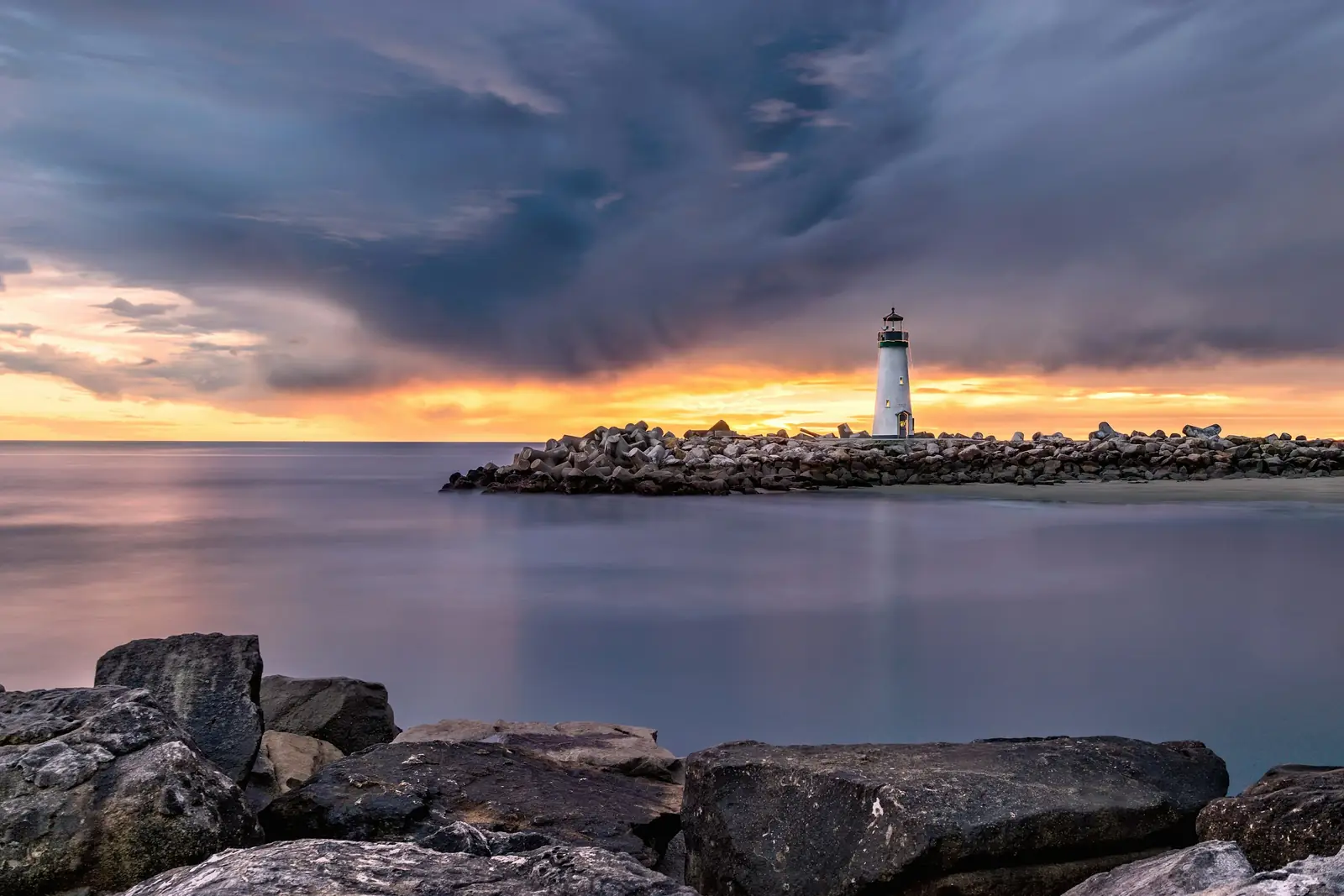
Photo: Rodrigo Soares on Unsplash
King tides, winter 2026–27
King tides and your slip
King tides are the highest tides of the year. The Coastal Commission publishes the statewide dates above; local times vary, and its tide map gives the times for your harbor.[1] Check the boat at the high and at the low:
- Lines long enough for the high and the low. A line tied to a ring that slides on a piling can jam at the top or bottom of its travel and hold the boat down as the water rises. In BoatUS's review of a year of sinking claims, 5% of boats sank after getting caught under the dock because of how their lines were arranged.[3]
- Long spring lines, or a line management system on the piling, let the boat rise and fall while staying centered in the slip.[3]
- Fenders that still protect the hull at the highest and lowest positions.
- Gangway and finger-dock access at the extremes, for you and anyone checking the boat.
High tides and storm surge are among the winter conditions the state boating agency warns about, and they can arrive together.[2]
Storm season
The state Division of Boating and Waterways advises boat owners and marina operators to stay storm-ready through winter and spring.[2] Its advice, for a boat in a slip:
- Watch the forecasts: the National Weather Service (weather.gov) and its Western Region hazards page, the Coast Guard's Local Notice to Mariners, NOAA Weather Radio, and, for the Delta and rivers, the state's CDEC river conditions. Sign up for alerts before you need them.
- Check dock lines before and after every storm, and know how your boat should be docked or moored to avoid storm damage.
- Have good anchoring and bailing gear on board and know how to use it.
- If you must go out, file a float plan with someone ashore, and carry a registered EPIRB.
- Never risk your life to protect property.
A trailerable boat left at the dock is most at risk with its stern open to the wind; if strong wind is forecast, put it on the trailer, or tie it bow-to the open water with the cover on, the batteries charged and the bilge pump working.[3]
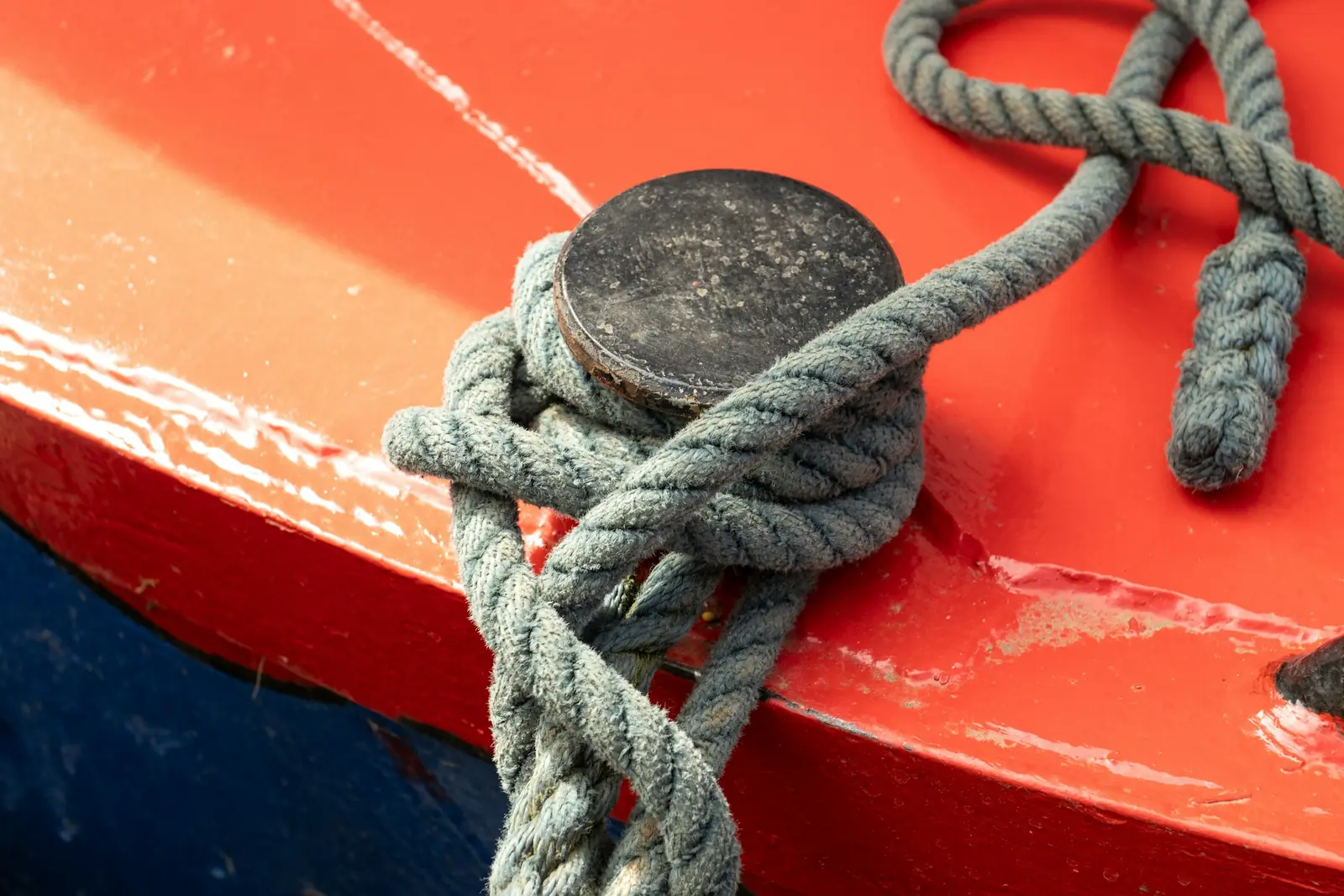
Photo: Scott Precious on Unsplash
Why boats sink at the dock
BoatUS's analysis of a year of insurance claims found boats sank at the dock more than twice as often as underway. More than a third of all sinkings came from a small part below the waterline failing with age, which made it the most common cause of dock sinkings, and a bilge pump only postpones the sinking until it fails or loses power.[3] The fixes are routine:
- Check the stuffing box every time you visit the boat.[3]
- Inspect all below-waterline fittings, hoses and clamps, and replace engine raw-water hoses at the first sign of wear.[3]
- Make cockpit drains and other plumbing reachable, and inspect them regularly.[3]
- Sterndrives: inspect the bellows every year, replace every 3–5 years.[3]
- Find and fix the source of any water the bilge pump is handling. Don't rely on it.
Leaving the boat for weeks
Most of the risk while you're away is the same as above, with no one there to notice. Before you leave:
- Arrange a boat-watch. Someone who checks the boat on a schedule and after every storm, knows where the keys are and how to get through the gate, and has your number. Tell the harbor office who it is.
- Water: stuffing box and fittings checked, seacocks you won't need closed (leave cockpit drains open), bilge pump on automatic with a charged battery and the charger on.
- Power: shore cord off the water and out of pinch points, in good condition, and never a household extension cord.[5] Heaters and other appliances off.
- Deck: hatches and ports latched, canvas and loose gear stowed or tied, furled sails wrapped, wheel or tiller secured.
- Bottom: keep the hull cleaning going. With copper paint, the state guidance is still only when needed and no more than once every 30 days.[4]
Sources
- California Coastal Commission. California King Tides Project (2026–27 dates).
- California State Parks, Division of Boating and Waterways. Winter Storm Boating Safety Fact Sheet.
- BoatUS. Keeping Your Boat Afloat (analysis of a year of sinking claims) (April 2014).
- Port of San Diego, LA County Beaches & Harbors, Division of Boating and Waterways, Coastal Commission. Recreational Boater's Guide to Using Hull Paint in California (2019).
- Michigan Department of Natural Resources. Electric Shock Drowning.