
Buying a boat in California
Buying a used boat in California means a survey, a DMV title transfer, use tax if you didn't pay sales tax to a dealer, a property tax bill that depends on who owned it on January 1, and a first year of catching up on maintenance. Here is the order to do it in.
1. Get a survey
A pre-purchase survey is a full condition-and-valuation inspection that often includes testing every system and a sea trial. A limited survey for insurance is not enough to decide whether to buy.[1]
- Pick your own surveyor. Surveying isn't a licensed profession, so anyone can call themselves a marine surveyor. Many insurers and banks require a surveyor credentialed by NAMS or SAMS, and a yacht broker can't ethically recommend one.[1] NAMS has a find-a-surveyor search and suggests looking for its NAMS-CMS designation.[2]
- Check with your insurer and lender first for any survey requirements.[1]
- Know what the report should cover: the hull ID number and registration numbers, construction, every system with its condition, recommended repairs, photos, and fair market value.[1]
- Ask whether the survey includes a haul-out and the engines, or whether you need a separate haul or an engine inspection by a mechanic.
- Use it. Read the report twice, ask the surveyor about anything unclear, and negotiate on the repairs it lists.[1]
2. Line up a slip
Marinas set conditions before they accept a boat. Berkeley Marina, for example, asks for proof of registration or Coast Guard documentation, liability insurance naming the City as additional insured, and a boat that can reach the dock under its own power and is seaworthy.[3] Ask your marina for its list before you close.
3. Transfer the title at the DMV
- Report the change of ownership to the DMV within 10 days; the seller files a Notice of Transfer and Release of Liability within 5 days.[4]
- For a boat you'll need the Certificate of Ownership signed by the seller, a bill of sale, the transfer fees and the use tax. Other forms, such as the Vehicle/Vessel Transfer and Reassignment form (REG 262), may apply.[4]
- Bought it out of state? Register it with the DMV within 120 days of bringing it into California.[5]
- Coast Guard-documented boats don't register with the DMV.[5] Their documentation is handled with the Coast Guard instead.

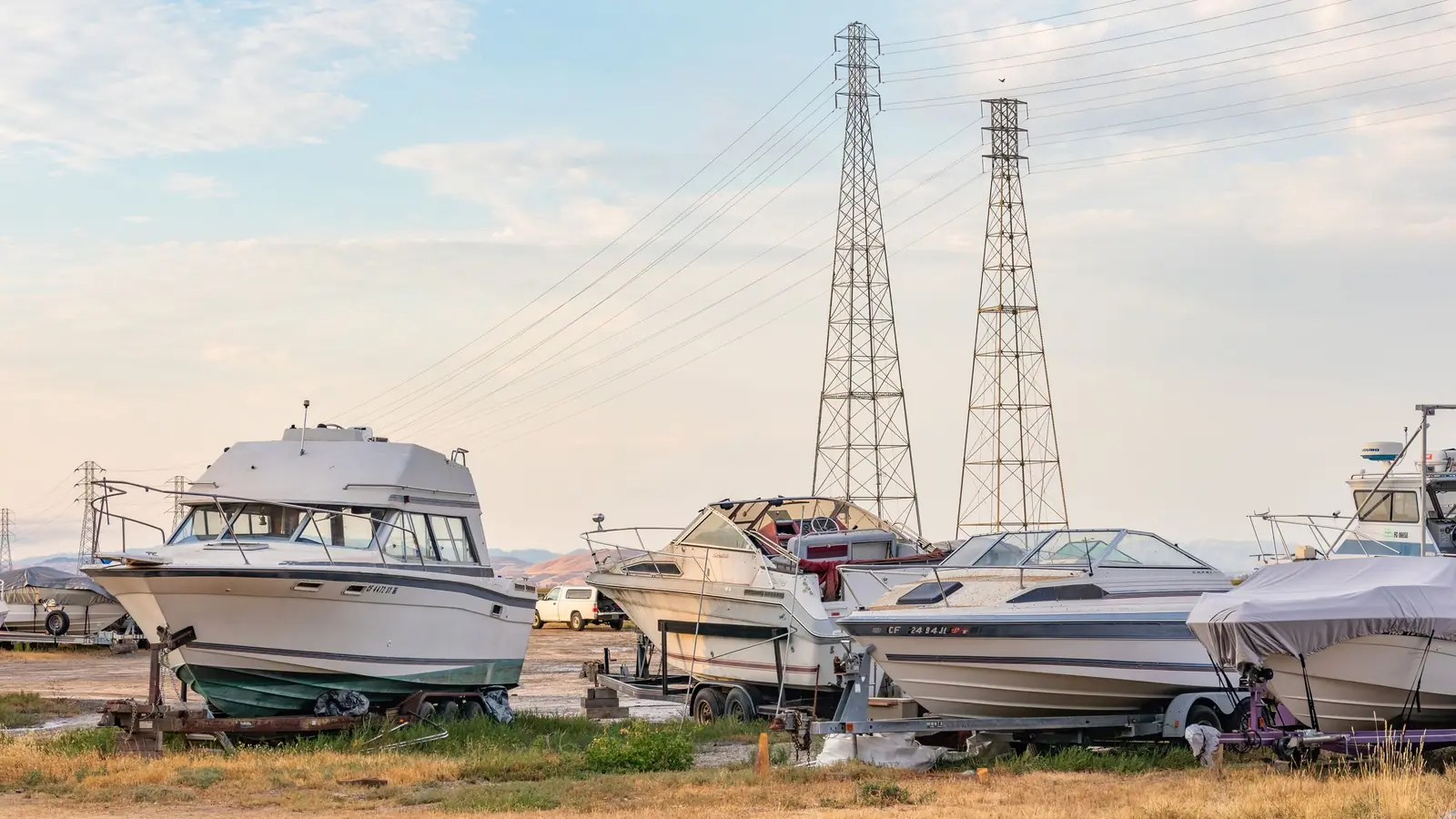
Photo: Mikhail Nilov on Pexels
4. Pay use tax (if you didn't pay sales tax)
If you didn't pay California sales tax to a California dealer, including on a private-party or out-of-state purchase, you generally owe use tax on the full purchase price (cash, any debt you took over and the value of a trade-in). The rate is the sales tax rate where the boat is registered (or, for a documented boat, where it's mainly moored). Tax paid to another state is credited.[6]
- How you pay: for a DMV-registered boat, the DMV usually collects it when you register. For a documented boat, you pay the CDTFA directly, by the last day of the month after the CDTFA contacts you or of the 12th month after purchase, whichever comes first.[6]
- The 12-month rule: a boat bought outside California and brought in within 12 months is presumed bought for use here if you're a California resident, if it's subject to California property tax in those 12 months, or if a nonresident keeps or uses it here more than half that time. Documents can overcome the presumption.[6]
- Repair exclusion: a boat brought in within those 12 months only for repair or modification at a licensed repair facility isn't taxed for that.[6]
- Keep the paper: the purchase agreement, the seller's statement of delivery date and place, proof of tax paid elsewhere, the insurance policy's navigation limits, and slip, repair and fuel receipts for 12 months.[6]
5. Know who owes this year's property tax
Boats are taxed each year by the county where they're usually kept, at their value on January 1. If you buy after January 1, the seller owes that year's tax; if you buy before, you do. Expect the assessor's Vessel Property Statement each year and file it on time; late filing adds a 10% penalty.[7] Factor this into the price and closing date.
6. Cards and stickers
- Everyone who runs the boat needs a California Boater Card unless an exemption applies.[8] See California boating rules.
- Using it in fresh water (lakes, rivers, the Delta east of Chipps Island)? Buy the mussel fee sticker separately from registration.[9]
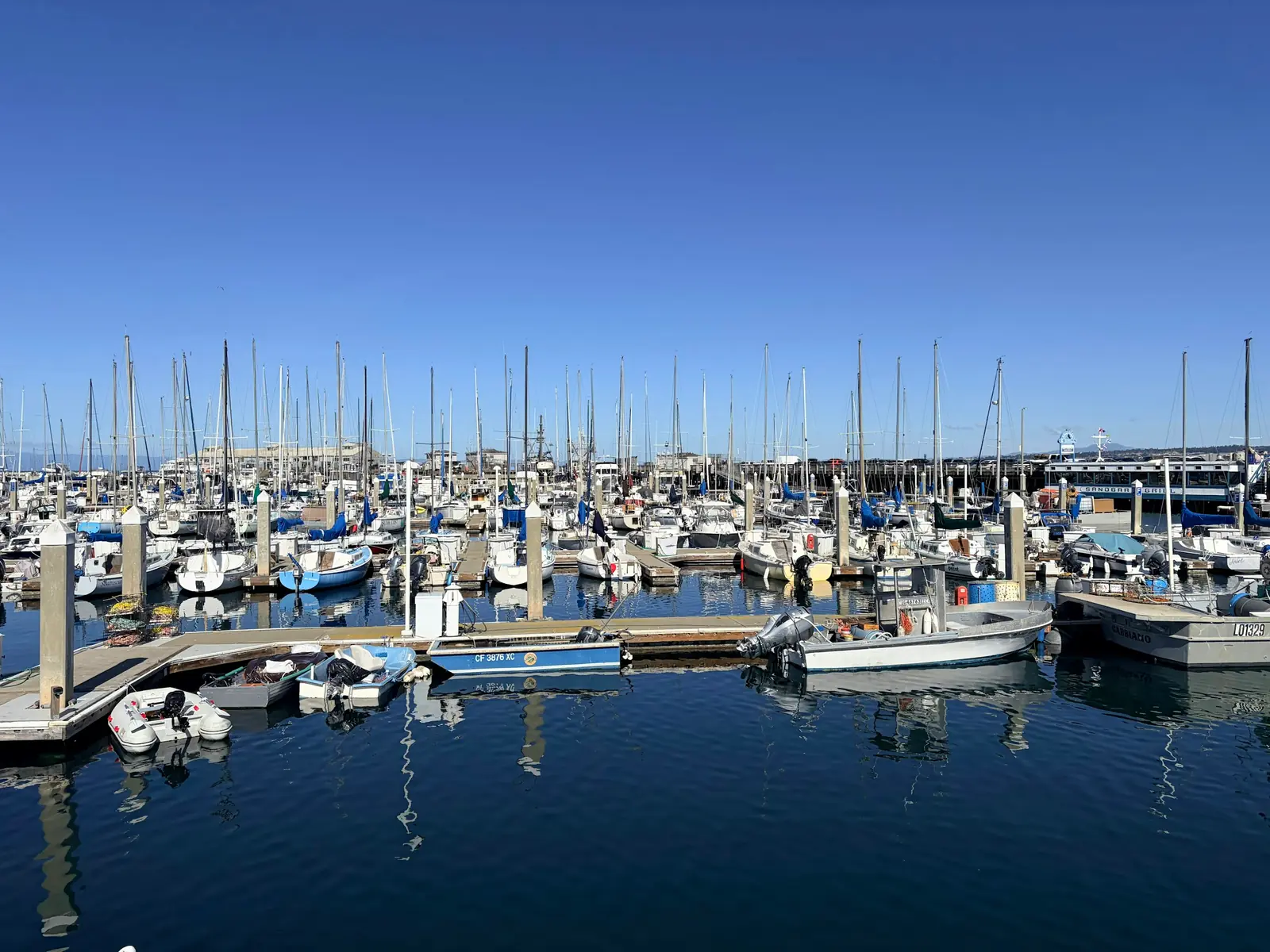
Photo: Gene Giromini on Unsplash
7. Your first-year maintenance plan
If the seller's records are thin, treat year one as a reset, starting with whatever the survey flagged:
- Find out what bottom paint is on it and when it was applied; that sets your cleaning schedule and next haul-out.
- Replace the zincs unless you know they're fresh, then check them at every cleaning.[10]
- Inspect every below-waterline fitting and hose, and the stuffing box; replace the raw-water impeller if its age is unknown (BoatUS suggests every 2–3 years).[11]
- Do a full engine service to your manual's schedule, so you have a baseline.
- Have the electrical system inspected and the GFCI/ELCI tested.[13]
- Check safety gear dates: flares expire 42 months after manufacture, disposable extinguishers 12 years after the date stamp.[12]
- Start a maintenance log and a maintenance calendar.
Sources
- American Boat & Yacht Council (ABYC). Surveying a Boat.
- National Association of Marine Surveyors (NAMS). NAMSGlobal: Find a Marine Surveyor.
- City of Berkeley. Berkeley Marina Berth Rental Application (insurance requirements for berthers).
- California DMV. Title Transfers and Changes.
- California DMV. Boat/Vessel Registration.
- California Department of Tax and Fee Administration. Tax Guide for Purchasers of Vessels.
- Sonoma County Assessor. Boat Property.
- California Legislature (public.law copy). Harbors and Navigation Code §678.11 (vessel operator card: phase-in and exemptions).
- California State Parks, Division of Boating and Waterways. California State Parks Announces Strengthened Mussel Sticker Program (October 23, 2026).
- BoatUS. Boat Corrosion Protection With Anodes (February 2017).
- BoatUS. Keeping Your Boat Afloat (analysis of a year of sinking claims) (April 2014).
- U.S. Coast Guard Boating Safety Division (copy hosted by Illinois DNR). A Boater's Guide to the Federal Requirements for Recreational Boats and Safety Tips (Rev. Nov 2023) (November 2023).
- Michigan Department of Natural Resources. Electric Shock Drowning.