
Hull cleaning in California
What in-water hull cleaning involves in California, suggested intervals for copper and non-copper paints, permits divers need, and what drives the price.
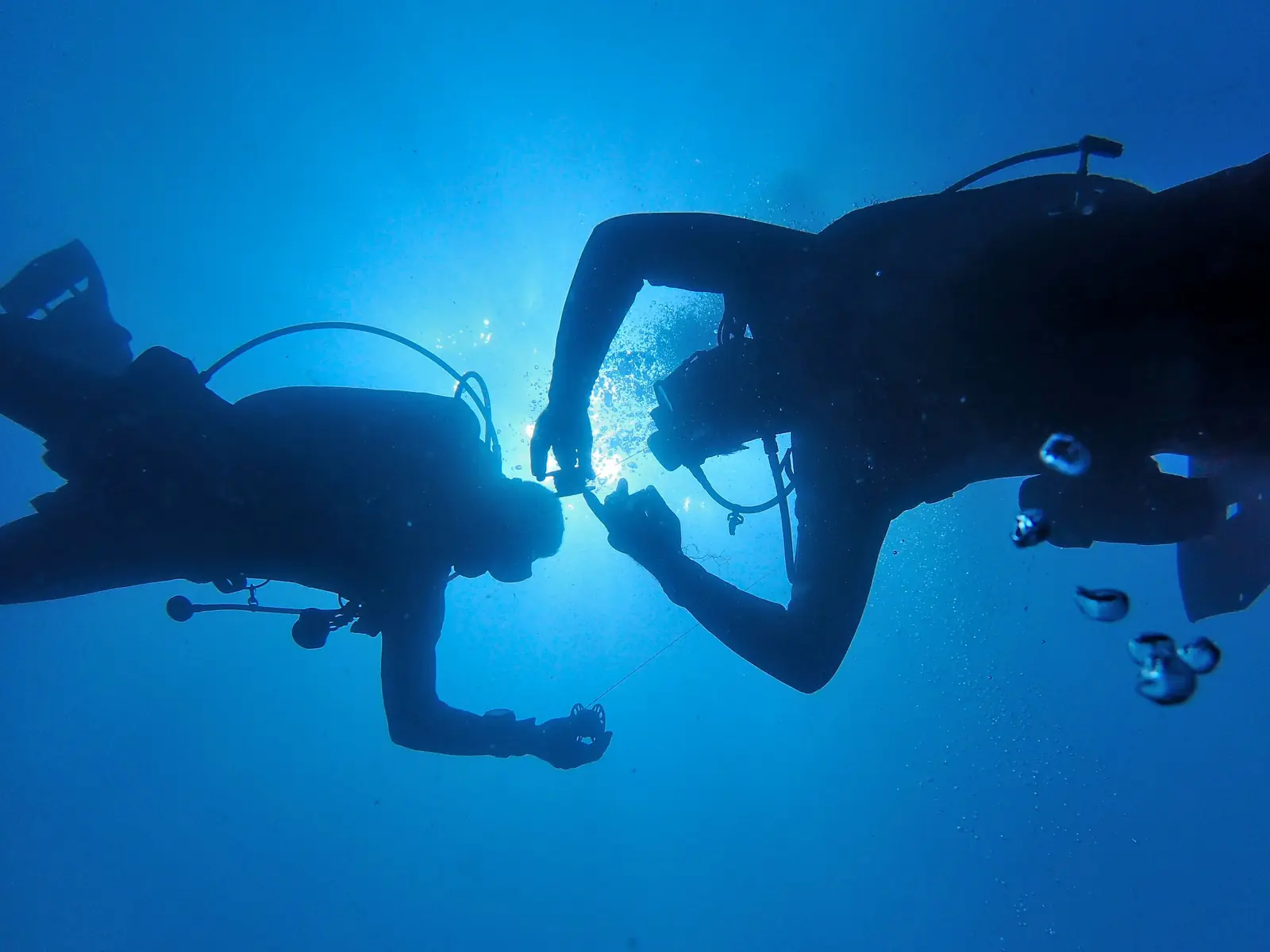
Photo: Markos Torpillas on Pexels
What it involves
A diver cleans the underwater hull while the boat stays in its slip, removing slime, weed and hard growth from the painted bottom and usually the running gear (propeller, shaft, struts and rudder). Many divers also inspect zincs on the same visit.
The Port of San Diego's hull cleaning ordinance treats zinc changes, running gear and through-hull work as separate from in-water hull cleaning, and many quotes price them separately too.[1]
Who does it: Hull divers, often small owner-operated businesses that run a monthly route through a few marinas.
How often, in California
- State guidance (not a law): wait at least 90 days after painting before the first in-water cleaning of a newly painted hull. Some harbors make this their own rule (Long Beach, Sacramento Marina, Berkeley Marina), and the paint label may say more.[2][3]
- State guidance for copper antifouling paint: clean only when needed, no more than once every 30 days. A light slime layer may not need cleaning at all.[2][3]
- Non-biocide coatings (silicone, ceramic, epoxy): cleaned more often, about every 2 to 4 weeks, because they rely on regular cleaning instead of a biocide.[2]
- Warm summer water and a boat that rarely leaves the slip both mean faster growth. Your diver's notes from the last few visits are the best guide to your own interval.
What affects the cost
- Length basis: some divers price per foot of length overall (LOA), others by waterline length or a flat monthly rate. Compare quotes on the same basis.
- How fouled the hull is: a first cleaning after months without service usually costs more than a routine monthly visit.
- Paint type: soft ablative and non-biocide coatings need gentler, sometimes more frequent cleaning.
- Running gear and zincs: whether the propeller and shaft are included, and whether zincs are billed as parts plus labor.
- Frequency: monthly route customers are often priced differently from one-off cleanings.
- Harbor overheads: permits, ID cards and insurance that a diver must carry to work in your harbor.
For published price ranges and the businesses they come from, see the hull cleaning cost guide.
California rules that apply
- California caps the copper leach rate of antifouling paints sold for recreational boats at 9.5 µg/cm²/day. The state names in-water hull cleaning as one of the main ways copper reaches marina water.[4]
- Shelter Island Yacht Basin (San Diego), Marina del Rey and Newport Bay have copper TMDLs, which is why hull cleaning is more tightly managed there.[2]
- Diving safety: when hull divers work as employees, California's diving rules require a standby diver at the dive location whenever a diver is in the water, line-tending or a buddy for each scuba diver, and a team trained in CPR, diver rescue and diving first aid. A dive company should be able to tell you how it staffs each dive.[5][6]
- San Diego Bay: every hull cleaning business needs the Port's bay-wide In-Water Hull Cleaning Permit ($250), and marinas must ask for proof of it. The Port is reviewing these policies now.[7][1]
- Marina del Rey: in-water hull cleaners need County BMP certification, a Commercial Services ID and the County burgee. Boat owners can be cited for using an uncertified cleaner.[8][9]
- Santa Barbara Harbor: hull cleaners need a Business Activity Permit and proof of hull cleaning BMP training completed within the previous five years.[10]
- Everywhere: use the softest tool that removes the growth, and stop if you see a paint plume. Haul out instead if the hull needs metal scrapers.[3]
What to tell a provider
A request with these details gets a more accurate quote and fewer follow-up calls:
- Boat length overall (LOA), and the waterline length if you know it
- Paint type, brand and the date the bottom was last painted
- Marina, slip number and how the diver gets through the gate
- When the hull was last cleaned, and how often you want it done
- Zinc sizes and where they are (shaft, trim tabs, outdrive), if known
- Whether you want photos or video of the hull and zincs after each visit
The free service request brief puts all of this on one page you can print or send.
Related guides and tools
Sources
- Port of San Diego. Ordinance 3025, amending District Code §4.14 (Regulation of In-Water Hull Cleaning) (October 12, 2021).
- Port of San Diego, LA County, DBW and California Coastal Commission. Recreational Boater's Guide to Using Hull Paint in California (May 2019).
- California Coastal Commission. Boat Hull Cleaning and Hull Coating Selection Factsheet (December 2, 2019).
- California Department of Pesticide Regulation. DPR 16-005 Copper-Based Antifouling Paint and Coating Products.
- California Department of Industrial Relations (Cal/OSHA). Title 8 §6056, Diving Operations: SCUBA and hookah diving.
- California Department of Industrial Relations (Cal/OSHA). Title 8 §6052, Diving Operations: general requirements.
- Port of San Diego. Copper Reduction Program (In-Water Hull Cleaning Permit).
- Los Angeles County Department of Beaches and Harbors. Hull Cleaning (Marina del Rey).
- Los Angeles County Department of Beaches and Harbors. Marina del Rey Commercial Services ID.
- City of Santa Barbara Waterfront Department. Business Activity Permit Policy (Revised 2026) (2026).