
Bottom paint in California
Antifouling bottom paint in California: copper limits, how long copper and non-copper coatings last, and what goes into a bottom job quote.
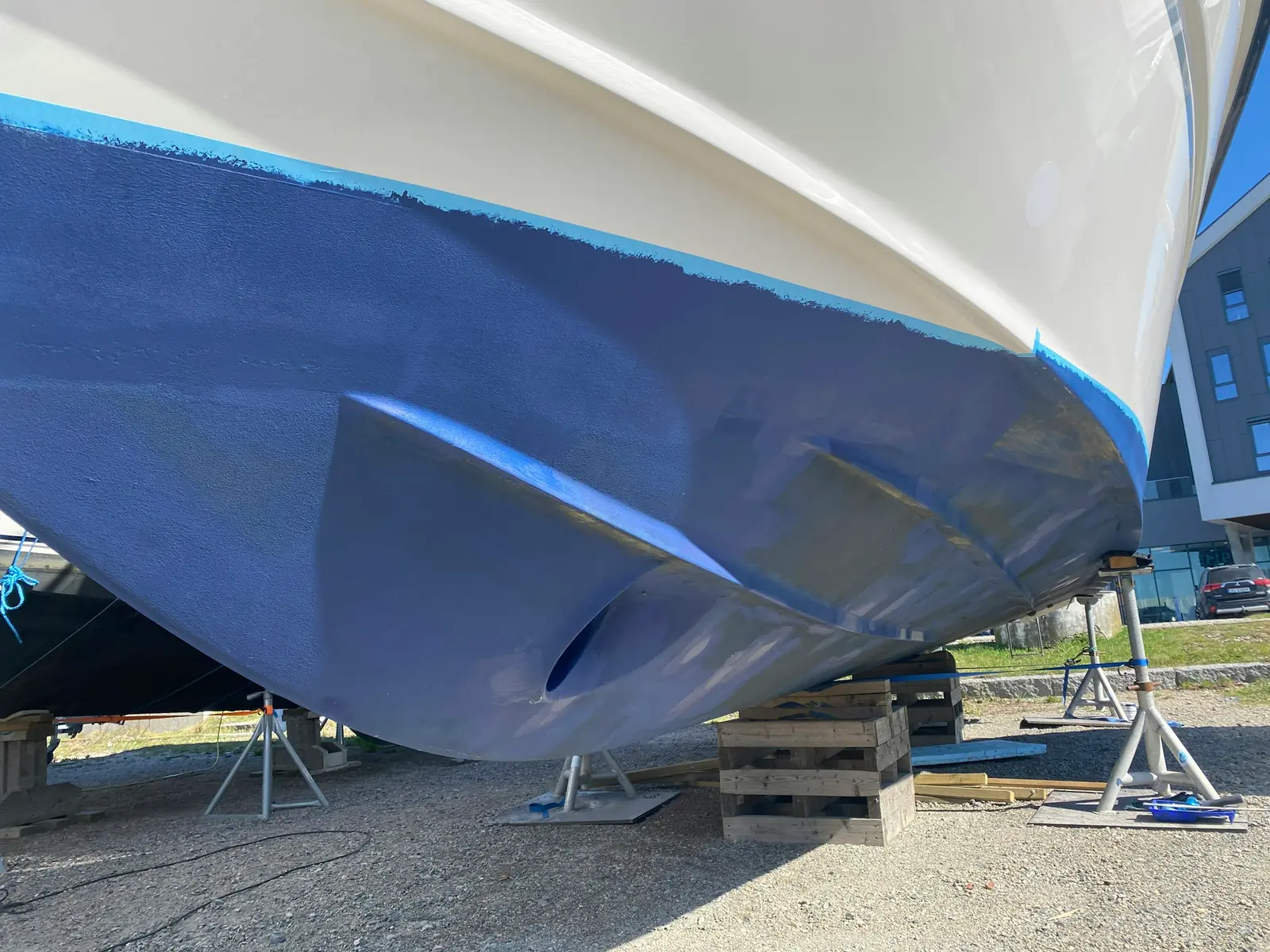
Photo: Dmitrijs Safrans on Unsplash
What it involves
Bottom paint (antifouling) slows growth on the underwater hull. A bottom job means hauling the boat out, washing and preparing the old paint, repairing any blisters or bare spots, and applying new coats, often with the running gear and zincs done at the same time.
California boaters choose between copper paints, non-copper biocide paints and non-biocide coatings (silicone, ceramic, epoxy). The choice sets how often the hull should be cleaned and how often it must be repainted.[1]
Who does it: Boatyards, and in some yards outside contractors working under the yard's rules.
How often, in California
- Typical useful life, as claimed by manufacturers: copper paint 2 to 3 years, non-copper biocide paint up to 2 years, non-biocide coatings 5 to 10 years.[1]
- Switching from copper to a non-biocide coating means stripping the copper paint first, so the first job costs more even if later haul-outs are less frequent.[1]
- State guidance: after new paint, wait at least 90 days before the first in-water cleaning. Follow the paint label and your harbor's rules where they differ.[1][2]
What affects the cost
- Boat length and hull shape (keels, struts and outdrives add work).
- Paint choice, and how many coats.
- Preparation: a light sanding over sound paint versus stripping to bare hull.
- Yard charges: haul and launch, blocking, power wash, lay days and environmental fees, often listed separately.
- Whether the yard allows owner-supplied paint, and any fee for it.
For published price ranges and the businesses they come from, see the bottom paint cost guide.
California rules that apply
- Copper antifouling paints labeled for recreational boats may not leach more than 9.5 µg/cm²/day; higher-leach paints could not be sold for recreational use after June 30, 2020.[3]
- In copper-impaired harbors (Shelter Island, Marina del Rey, Newport Bay) agencies encourage non-biocide or lowest-leach copper paint.[1]
- Boatyards set their own contractor rules. KKMI in Point Richmond, for example, does not let outside contractors sand antifouling paint or spray paint, and requires prior approval for each vessel.[4]
What to tell a provider
A request with these details gets a more accurate quote and fewer follow-up calls:
- Boat length, beam, draft and weight (from the manual or registration)
- Current paint type and when it was applied
- Known problems: blisters, bare spots, peeling
- Running gear, zincs, through-hulls you want checked while it's out
- Preferred timing, and whether you need a sling or trailer haul
The free service request brief puts all of this on one page you can print or send.
Related guides and tools
Sources
- Port of San Diego, LA County, DBW and California Coastal Commission. Recreational Boater's Guide to Using Hull Paint in California (May 2019).
- California Coastal Commission. Boat Hull Cleaning and Hull Coating Selection Factsheet (December 2, 2019).
- California Department of Pesticide Regulation. DPR 16-005 Copper-Based Antifouling Paint and Coating Products.
- KKMI (Point Richmond boatyard). KKMI Contractor and Customer Rules (December 2022).