
Shore power safety and electric shock drowning
Electric shock drowning happens when electricity leaking from a boat or dock into the water passes through a swimmer. It can paralyze the muscles, so the swimmer can't move and drowns. This page covers how to respond, how to prevent it, and the checks that keep your own slip safe.
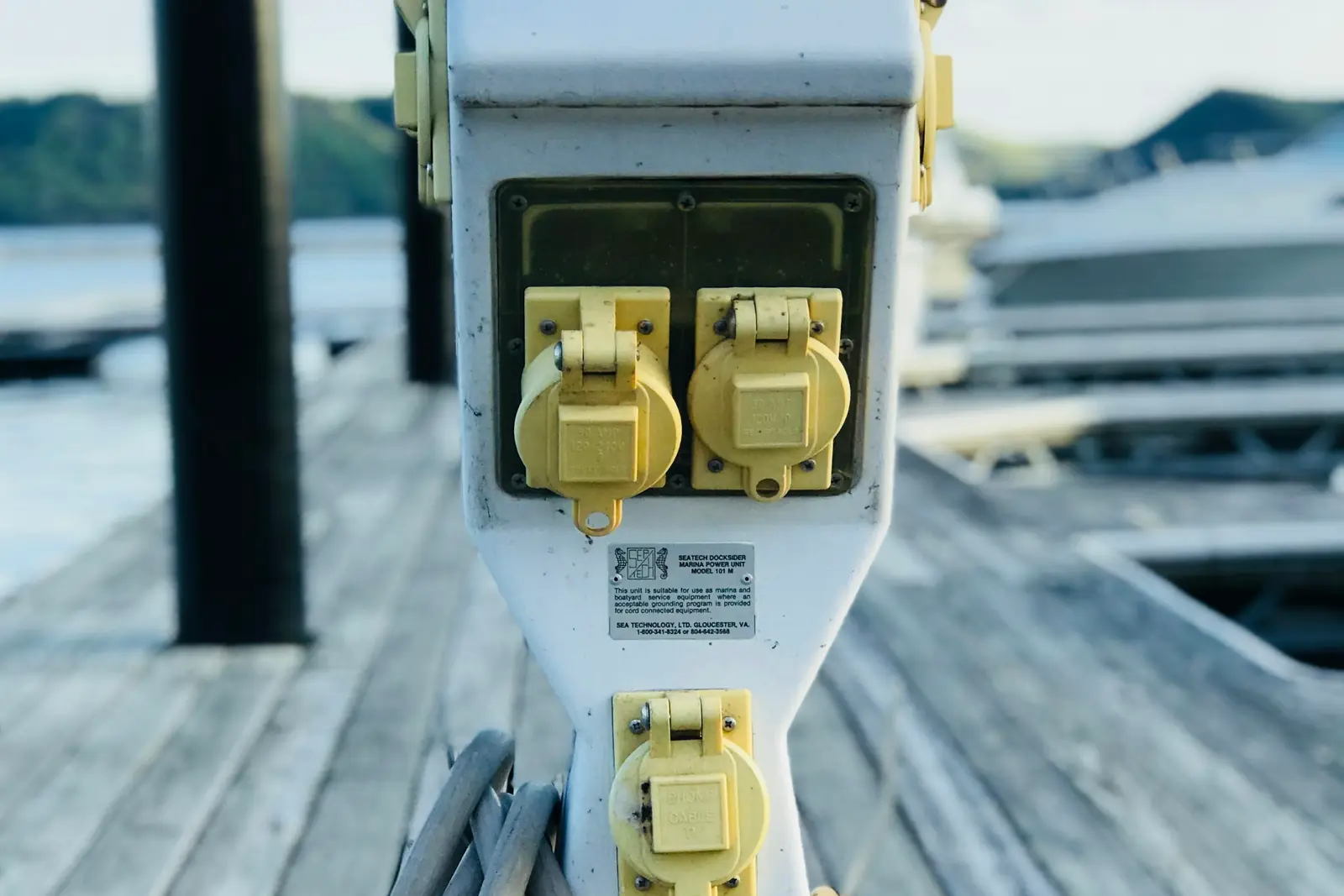
Photo: George Kroeker on Unsplash
What electric shock drowning is
A fault in a boat's AC wiring, its shore cord or the dock's wiring can put current into the water around it. A swimmer in that water can lose muscle control, become unable to move, and drown.[6] Pets are affected too.[6]
Never swim near docks with shore power
- Don't swim in or near marinas, docks or boatyards.[7] Keep pets out of the water there too.[6]
- If you feel a tingling in the water, stop, shout a warning and swim away from the dock or boat before you get out (see the emergency steps above), then tell the marina staff.[1][3]
- "Safe to swim" indicator lights are not proof the water is safe.[7]
- Report electrical hazards on the dock to the harbormaster so they can be fixed.[6]
Make your own boat safe
Boaters are a large part of the solution.[6] The checks recommended for boat owners:
- Have a qualified marine electrician install an ELCI (equipment leakage circuit interrupter) on the boat, or use a GFCI (ground fault circuit interrupter) in the shore power cord.[6] An isolation transformer is another option for boats with AC systems.[7]
- Get the boat's electrical system inspected once a year.[6] Use an electrician with current ABYC electrical certification, or an ABYC Certified Technician.[7] ABYC's directory lets you look one up.[8]
- Test the GFCI and ELCI as the manufacturer recommends.[6]
- Use shore power cords that are in good condition and properly rated. Never use household extension cords.[6] Check both ends of the cord, and the pedestal outlet, for corrosion.
Your zincs can be an early warning. If they suddenly start wearing much faster than usual, have the boat and the dock checked for stray current.[9] More in zincs and haul-outs.

Photo: David Klein on Unsplash
Ask your marina
The Electric Shock Drowning Prevention Association asks marinas to install GFCI protection on shore power pedestals and marina circuits, and to have them inspected to the fire and electrical codes (NFPA 303 and NFPA 70).[7] If your marina allows swimming or diving near the docks, ask how it checks the docks for leakage. Hull divers work in this water every day; if you hire one, ask whether they want your shore power off while they work.
When you leave the boat
A boat left plugged in for weeks still needs its cord kept off the water and out of pinch points. The storm and absence checklist covers shore power along with lines and bilge.
Sources
- National Fire Protection Association (NFPA). Protect Yourself from Electric Shock Drowning.
- Electric Shock Drowning Prevention Association. Electric Shock Drowning: A Silent Killer (awareness brochure).
- Electrical Safety Foundation International (ESFI). Boating & Marina Safety.
- Safe Electricity (Energy Education Council). If You Feel A Shock, Swim Away From The Dock.
- BoatUS Magazine. ESD Or Drowning? (June 2021).
- Michigan Department of Natural Resources. Electric Shock Drowning.
- Electric Shock Drowning Prevention Association. Preventing Electric Shock Drowning.
- American Boat & Yacht Council (ABYC). Choosing a Marine Service Technician.
- BoatUS. Boat Corrosion Protection With Anodes (February 2017).