
Marine electrical in California
Marine electrical work in California: shore power safety and electric shock drowning, ELCI and GFCI protection, and the credentials owners can check.
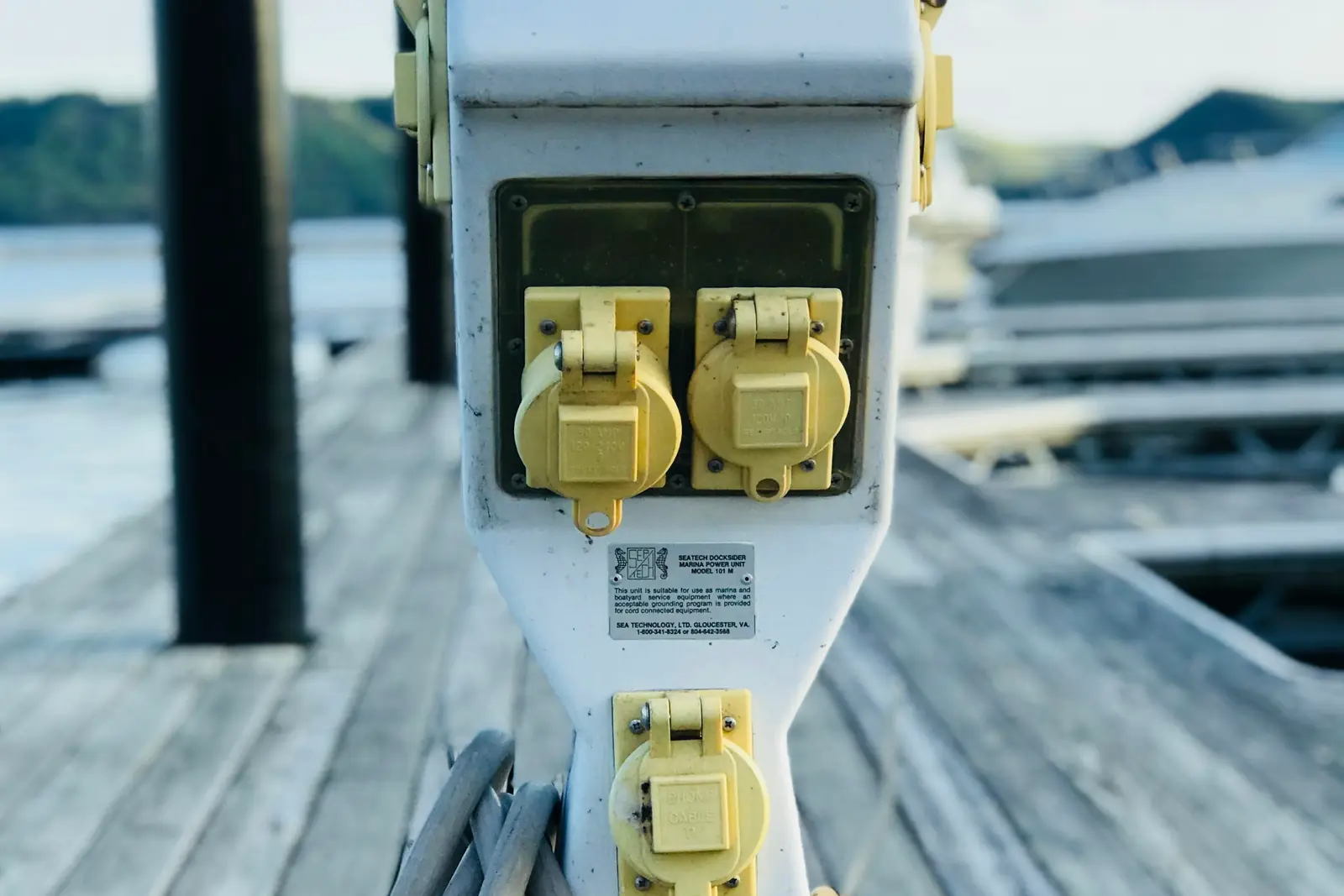
Photo: George Kroeker on Unsplash
What it involves
Marine electricians work on a boat's DC system (batteries, charging, wiring, lighting), its AC system (shore power, inverters, generators) and often its electronics (chartplotters, radar, instruments and NMEA 2000 networks).
Boat wiring is not house wiring: it has to survive vibration, moisture and corrosion, and faults in the water around a boat can be deadly.
Who does it: Marine electricians and electronics installers, independent or working for a boatyard or dealer.
How often, in California
- Press the TEST button on every GFCI receptacle and on the ELCI once a month, and replace any device that doesn't trip.[1]
What affects the cost
- Troubleshooting time: finding an intermittent fault often takes longer than fixing it.
- Parts: marine-grade wire, connectors and breakers cost more than household parts.
- Access: wiring behind panels or in tight spaces adds labor.
- Electronics installs: mounting, running cable and network setup.
For published price ranges and the businesses they come from, see the marine electrical cost guide.
California rules that apply
- Electric shock drowning happens when AC current leaks into the water near shore power and paralyzes a swimmer. The water looks normal, so there is no warning. Never swim near docks or boats connected to shore power.[1]
- In an emergency: a swimmer who feels tingling should stop, shout a warning, swim away from the dock or boat back the way they came, and get out away from the power source, not on a metal ladder. A rescuer should never go in the water: cut the power at the shore source first, throw a flotation device and call 911.[2][3][4]
- ABYC standard E-11 calls for an ELCI (equipment leakage circuit interrupter, tripping at 30 mA) with the main shore power breaker, and Type A GFCIs (5 mA) on receptacles in the head, galley, machinery spaces and weather decks. One does not replace the other. ABYC standards formally apply to new construction and major refits, but older boats on shore power carry the same risk.[1]
- ABYC offers Marine Electrical and Advanced Marine Electrical certifications. Technician-level certification needs a passed exam plus two years of experience and is valid for five years. ABYC certifies individuals, not shops.[5][6]
- NMEA certifies marine electronics installers, from Basic installer to Advanced and top-tier technician levels.[7]
- We found no California license specific to wiring on a boat. Work on docks and pedestal shore power is different: it is work on a fixed structure, so ask the Contractors State License Board whether a license is needed.
What to tell a provider
A request with these details gets a more accurate quote and fewer follow-up calls:
- The symptom, when it happens and what you've already tried
- Shore power rating (30 A or 50 A) and any recent breaker trips
- Battery type and age, and charger or inverter model
- Make and model of any electronics involved
- Marina, slip and whether the boat can be on shore power during the visit
The free service request brief puts all of this on one page you can print or send.
Related guides and tools
Sources
- West Marine (citing ABYC standards E-11 and E-13). ELCI and GFCI: electrical shock protection.
- National Fire Protection Association (NFPA). Protect Yourself from Electric Shock Drowning.
- Electric Shock Drowning Prevention Association. Electric Shock Drowning: A Silent Killer (awareness brochure).
- Electrical Safety Foundation International (ESFI). Boating & Marina Safety.
- American Boat & Yacht Council. ABYC Certification Program.
- American Boat & Yacht Council. Choosing a Marine Service Technician.
- National Marine Electronics Association. NMEA training and certification.