
How to become a hull diver in California
Hull divers clean the bottoms of boats in their slips, usually monthly, and check or replace zincs while they're down there. There's no state license. What you need is diving skill, the training each harbor asks for, and a route of boats. Here's the path in California, including the diving safety rules that apply once divers are employees.
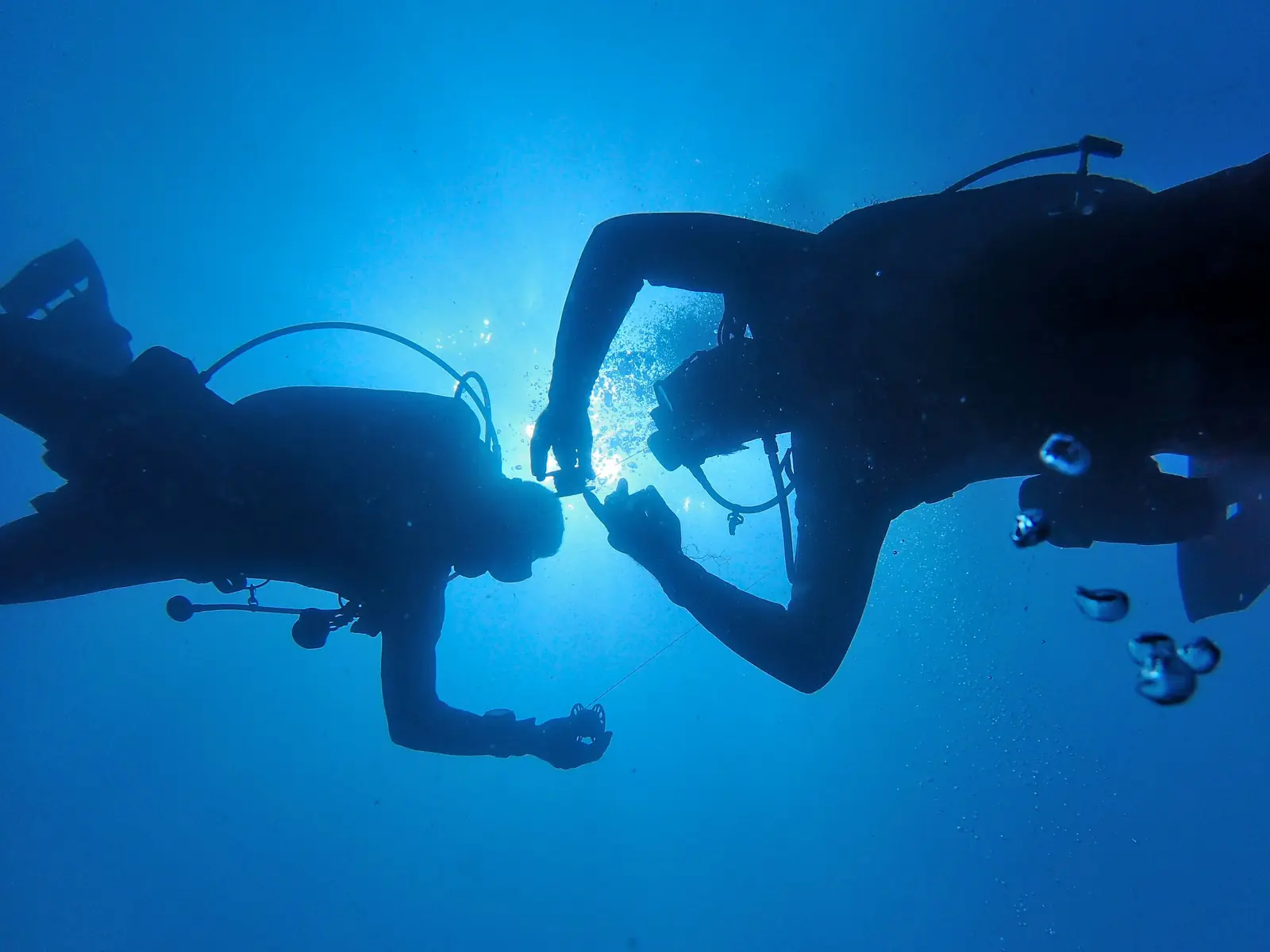
Photo: Markos Torpillas on Pexels
What the work involves
- Cleaning growth off the hull, running gear and through-hulls with pads and brushes, gently enough not to strip copper paint. A visible paint plume is prohibited in San Diego Bay and Marina del Rey.[1][2]
- Checking and replacing zinc anodes, and reporting problems to the owner.
- Diving in cold, low-visibility marina water, often many boats a day, with someone on the dock or a second diver ready to help (see the diving safety rules).
- Keeping records of each clean, and getting paid for a recurring route.
Copper rules shape the job. Aggressive cleaning raises copper leaching for weeks, which is why harbors with copper limits regulate how cleaning is done.[4]
Certification, harbor rules and diving safety rules
Three different sets of requirements get mixed up in hull diving. Here they are separately.
1. Recreational scuba certification
A card from PADI, NAUI, SSI or a similar agency shows you were trained for recreational diving: PADI's Open Water card, for example, qualifies you to dive with a buddy to 18 meters (60 feet).[20] Some harbors ask to see a diver card before issuing an ID (see below). A recreational card is not training for working dives, and on its own it doesn't show the training the workplace diving rules call for.
2. Harbor and permit requirements
Harbors regulate who may clean hulls in their water and how, mostly to limit copper pollution: the Port of San Diego's hull-cleaning permit and BMP training form, Marina del Rey's Commercial Services ID with a diver card and BMP certification, and Santa Barbara's BMP training. These rules are about access and water quality. None of them sets diving safety practices, and meeting them doesn't mean a crew meets the diving safety rules.
Marina del Rey's Commercial Services ID requires a diver certification card, without naming a level.[2] Ask the harbor if you're unsure what card it accepts. Hull-cleaning BMP training:
- Marina del Rey: BMP certification for every cleaner, through a free LA County online course (email TMDL@bh.lacounty.gov), renewed every two years.[2]
- Santa Barbara: proof of BMP training within the previous five years.[3]
- San Diego Bay: your employer (or your own business) holds the Port permit and files a BMP training form for each diver.[1]
The California Professional Divers Association developed the BMPs these programs are based on.[5] We couldn't find a current CPDA course schedule.
3. Workplace diving rules (when divers are employees)
Cal/OSHA's Diving Operations orders (Title 8, Article 152, §§6050–6058, amended effective January 1, 2026) apply to all diving operations in California, with exemptions for instruction, public-safety, human-research and scientific diving.[7][8] They define commercial diving operations as diving in which “repair, maintenance” or ship repair work is performed.[9] Hull cleaning isn't named, but it reads as maintenance; Cal/OSHA hasn't said so publicly that we found. Federal OSHA's commercial diving standard (29 CFR 1910 Subpart T) covers the same ground for places of employment.[14] For employers, the California rules require:
- A written Manual for Diving Safety at the dive location, with emergency procedures and contact numbers for the nearest recompression chamber and medical facilities, and a person in charge at the dive location.[10][12]
- Divers who are “trained and qualified for the diving mode being used,” and every dive team member trained in CPR, diver rescue techniques and diving-related first aid. A first-aid kit and a bag-type manual resuscitator at the site.[10][15]
- For scuba: a standby diver available while a diver is in the water; each diver line-tended from the surface or accompanied by another diver in effective communication; line-tending in enclosed or physically confining spaces; no deeper than 130 feet.[13][16]
- Hookah (surface-supplied air through a hose from a compressor, common in hull cleaning): the California text reads “Hookah diving shall be permissible only during zoo and aquarium exhibit diving and film and TV diving operations,” and requires a separate team member tending each hookah diver's hose.[13] If your crew uses hookah, ask Cal/OSHA how this applies to hull cleaning before anyone dives.
- A record of each dive operation, kept for at least a year,[10] and a current physical exam for each dive team member, repeated yearly.[11]
Who is covered. These duties fall on employers. Federal OSHA says self-employed workers are not covered by the OSH Act,[17] and the California rules define a diver as “an employee.”[9] So a sole proprietor diving with no employees appears to be outside them. Once anyone works for you, whether a second diver or a tender on the dock, expect them to apply; calling that helper a contractor doesn't settle it under California's ABC test. Whether partners or co-owners who dive together are covered is not clear from the text.
Commercial diver training. There is no commercial diver license in the United States. The rules require training and qualification for the work rather than a named school; OSHA has accepted a commercial diving school certificate, an ADCI card, or documented training to the ANSI/ACDE-01 consensus standard as ways to show it.[18] If you employ divers, you need to be able to show each one is trained and qualified for the diving you do.
One California path: Santa Barbara City College's Marine Diving Technology certificate takes two semesters and leads to the ADCI Entry Level Tender/Diver card, which meets the ANSI/ACDE-01-2015 standard.[6] It also opens up commercial and inspection work beyond hull cleaning.
Two ways in: work for a company or start your own
Working for a dive company gets you on a route quickly and under their permits and insurance. If a company pays you as a 1099 contractor, California's ABC test decides whether you're really an employee; the label doesn't.[21] A company that employs divers has to follow the workplace diving rules above: a standby diver, tending or a buddy, trained divers and an emergency plan. Ask how they staff each dive before you join.
Starting your own business means harbor permits, insurance that covers working dives, a business license in each harbor city, building a route, and a safety plan for every dive even if no rule requires one for you yet. Start with starting a hull-cleaning business.
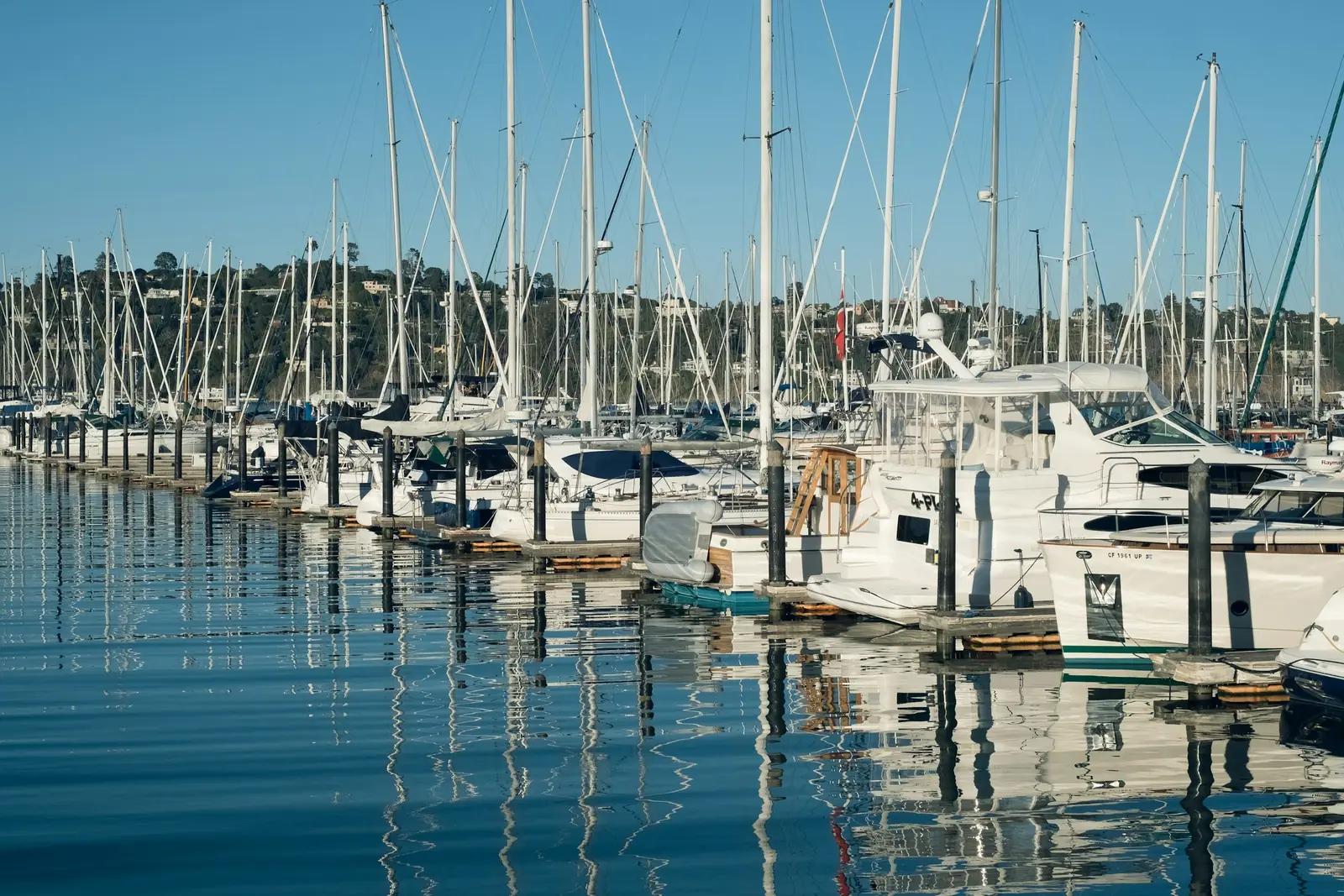
Photo: David Klein on Unsplash
Pay
We haven't found reliable public wage data specific to hull divers, and the federal wage figures for commercial divers cover very different work. For pricing your own route, see the hull cleaning cost guide (published rates we found) and the hourly rate calculator.
Sources
- Port of San Diego. Ordinance 3025: regulation of in-water hull cleaning (District Code §4.14) (October 12, 2021).
- Los Angeles County Department of Beaches and Harbors. Hull cleaning in Marina del Rey.
- City of Santa Barbara Waterfront Department. Business Activity Permit Policy (Revised 2026) (2026).
- California Department of Pesticide Regulation. DPR 16-005 Final Statement of Reasons: copper antifouling paint leach rate.
- California Professional Divers Association. California Professional Divers Association: introduction (presentation to the Coastal Commission) (March 14, 2012).
- Santa Barbara City College. Marine Diving Technology program.
- California Department of Industrial Relations (Cal/OSHA). Title 8, Group 26, Article 152: Diving Operations (§§6050–6058); amended effective 2026-01-01.
- California Department of Industrial Relations (Cal/OSHA). Title 8 §6050, Diving Operations: scope.
- California Department of Industrial Relations (Cal/OSHA). Title 8 §6051, Diving Operations: definitions.
- California Department of Industrial Relations (Cal/OSHA). Title 8 §6052, Diving Operations: general requirements.
- California Department of Industrial Relations (Cal/OSHA). Title 8 §6053, Diving Operations: medical requirements.
- California Department of Industrial Relations (Cal/OSHA). Title 8 §6054, Diving Operations: Manual for Diving Safety (emergency contacts).
- California Department of Industrial Relations (Cal/OSHA). Title 8 §6056, Diving Operations: SCUBA and hookah diving.
- U.S. Code of Federal Regulations (via Cornell LII). 29 CFR §1910.401, Commercial diving operations: scope and application.
- U.S. Code of Federal Regulations (via Cornell LII). 29 CFR §1910.410, Qualifications of dive team.
- U.S. Code of Federal Regulations (via Cornell LII). 29 CFR §1910.424, SCUBA diving.
- U.S. Occupational Safety and Health Administration. Frequently asked questions: Am I covered by OSHA? (self-employed workers are not).
- U.S. Occupational Safety and Health Administration. Standard interpretation: commercial diver training and certification (no US licensing program) (March 29, 2000).
- California Department of Industrial Relations (Cal/OSHA). Cal/OSHA Consultation Services (free and confidential help for employers).
- PADI. What's the difference between Scuba Diver and Open Water Diver? (October 22, 2018).
- California Department of Industrial Relations, Labor Commissioner. Independent contractor versus employee.
- Port of San Diego. Copper Reduction Program.