
How to become a marine electrician in California
Marine electricians wire, troubleshoot and upgrade boats' DC and AC systems: batteries and charging, shore power inlets, inverters, lighting, corrosion problems and, often, navigation electronics. Boat wiring follows ABYC standards, not the building code, and the credentials are industry certifications, not a state license.
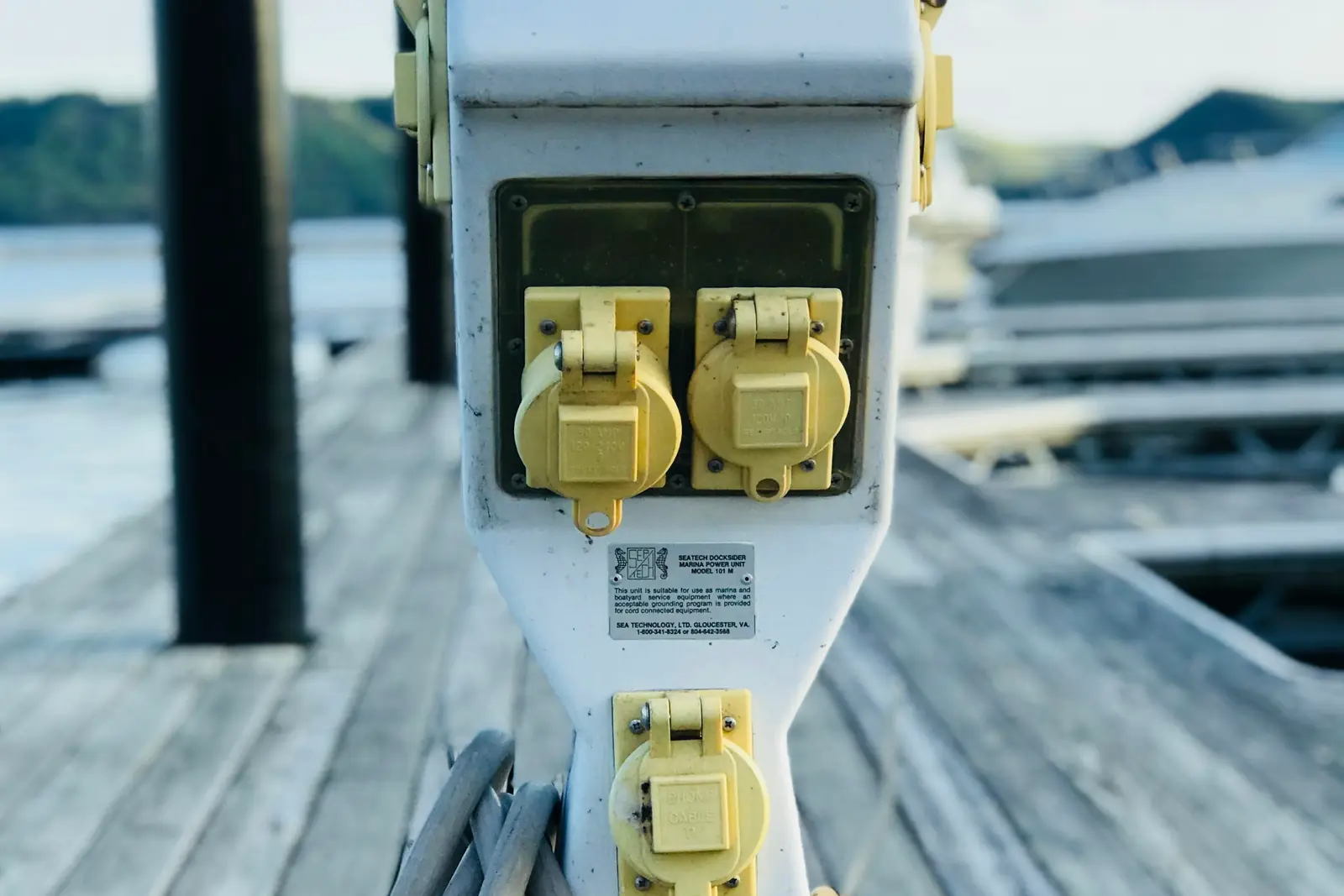
Photo: George Kroeker on Unsplash
Boat wiring vs dock wiring
This is the line that matters most for licensing. California's contractor law covers work on buildings and other structures[7], and the general engineering classification expressly covers harbors, docks and wharves.[8] Dock pedestals and the wiring that feeds them are part of the dock. A maritime attorney's view is that work aboard a boat, which is personal property, needs no contractor's license.[9]
Credentials owners and yards look for
ABYC (electrical systems)
The American Boat & Yacht Council offers Marine Electrical, Advanced Marine Electrical and Marine Corrosion certifications. Technician level requires a passing exam and 2 years of work experience; certifications stay active for 5 years, and three or more earn Master Technician.[1] See the Marine Electrical page for the exam.[2]
NMEA (electronics)
If you install chartplotters, radar, autopilots or NMEA 2000 networks, the National Marine Electronics Association's certifications are the standard.[3] The Basic Marine Electronics Installer course is one day with no prerequisite and a 50-question test, 80% to pass; certificates last three years.[4] The Advanced level requires the basic certificate and installation experience.[5]
How people get the experience
- Apprenticeship. Las Positas College's Marine Technology apprenticeship certificate covers the mechanical and electrical systems of marine equipment.[6]
- Boatyards and electronics dealers hire helpers and train them. The 2 years of work experience ABYC requires for technician status usually comes from here.
- From shore-side electrical work. Electricians who move to boats need to learn ABYC's DC and AC standards, galvanic corrosion and isolation, which differ from building wiring.
Photo: Vladislav Klapin on Unsplash
Working in California harbors
Harbors with vendor permits usually list electrical work among the trades that need one. Santa Barbara's Business Activity Permit, for example, covers electronics and electrical and plumbing work.[10] If you supply parts worth more than 10% of a job, or bill them separately, you need a seller's permit.[11]
Next: marina vendor approval and certifications by trade.
Sources
- American Boat & Yacht Council. Certification program.
- American Boat & Yacht Council. Marine Electrical certification.
- National Marine Electronics Association. Training and certification.
- National Marine Electronics Association. Basic Marine Electronics Installer.
- National Marine Electronics Association. Advanced Marine Electronics Installer.
- Las Positas College. Marine Technology Boating 101 Certificate of Achievement (2025–2026 catalog) (2025).
- California Legislature (via public.law). Business and Professions Code §7026 (contractor defined).
- California Legislature (via public.law). Business and Professions Code §7056 (general engineering contractor).
- The Log. Does a boat repair professional need a contractor's license? (Ask the Attorney) (December 18, 2015).
- City of Santa Barbara Waterfront Department. Business Activity Permit Policy (Revised 2026) (2026).
- California Department of Tax and Fee Administration. Regulation 1546, Installing, Repairing, Reconditioning in General.